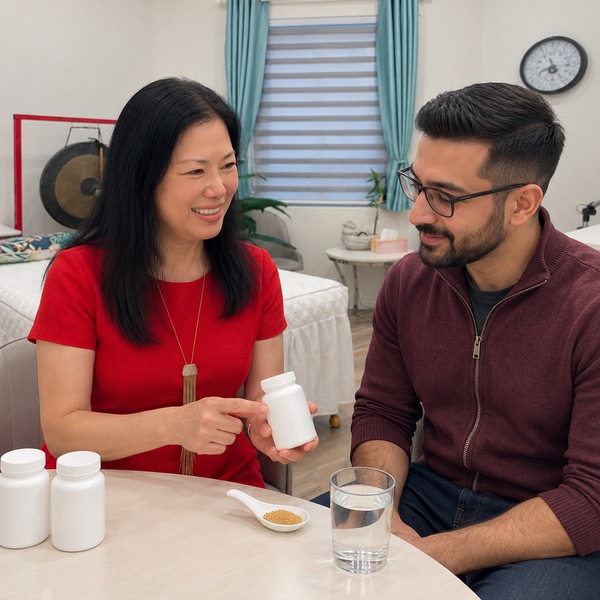
Herbal medicine here comes as granules in bottles, not loose herbs to cook. Learn what the written directions should cover and why borrowed routines or remembered amounts do not apply.
Classical prescriptions often carried the word tang, a reminder of formulas once cooked in a pot at home. That is not the approach taken at this clinic. Dr Christine Shen, Acupuncturist, supplies her formulas as concentrated granules packed in containers, and the clinic does not supply loose raw herbs to boil or strain at home.
Each product is prepared for an individual, so the preparation method, measuring instructions and storage advice can differ from one bottle to the next. The first step is always to identify the correct bottle and read its own directions.
A consultation covers a lot of ground, and details slip away on the drive home. Ask Christine to explain the written instructions for your product and check that they cover:
If anything on the label is unclear, raise it before you begin rather than guessing.
A cooking recipe for loose herbs, a relative's routine or a quantity remembered from an earlier prescription belongs to a different product. None of these should replace the directions written for your granules. If a bottle is damaged or its contents look unexpected, set it aside and ask.
Herbal care sits alongside the rest of your health. Tell Christine when your GP or another doctor starts, stops or changes a medicine, and let your pharmacist know you are using a herbal product. If a new symptom appears and you wonder whether the granules are involved, ask rather than altering the amount on your own.
Christine sees patients for Chinese herbal medicine at the Lane Cove clinic. Bring your bottle to the next visit and she can go through the label with you line by line, so the routine at home feels straightforward from the first dose.
Copyright© 2002-2026 visuallink© SaaS - Web Hosted Solutions, Design and Maintenance by Visual Link IT Pty Ltd - Software Solutions

Please Login or Sign up to be able to comment