Seasonal tonics have a long history in Chinese medicine, but the weather is not a diagnosis. How individual granule bottles are discussed instead of copying a seasonal recipe.
Chinese medicine has a long custom of seasonal care. In some regions, concentrated tonic preparations became associated with the cooler months, when people sought something for the season ahead. The tradition is rich and can feel comforting, which is part of its appeal.
Neither the season nor a familiar custom makes a herbal product suitable or free of risk for everyone, and the clinic does not make or supply home-style tonic pastes.
A change in weather does not establish that a person needs a tonic. Traditional theory itself selects ingredients for an individual pattern, not for a date on the calendar. If you are thinking about seasonal care, the starting point should be your current needs rather than a sense that it is simply the time of year.
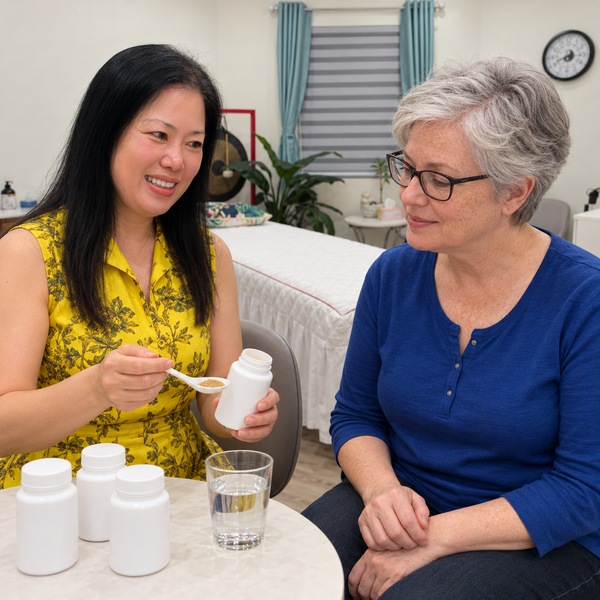
What Dr Christine Shen, Acupuncturist, provides is a bottle of herbal granules carrying directions written for one individual: how to make up a dose, how much to measure and where to keep it. The useful conversation is about the specific product on the table, not a seasonal recipe from a book, a website or a relative.
Keep the written directions with the original bottle and note the review date. Tell Christine if your other medicines change, and mention the granules to your GP or pharmacist. If you notice a symptom and wonder whether the product is involved, ask for advice instead of experimenting with the dose.
If the cooler-month tradition interests you, Christine can explain its history at the Lane Cove clinic and talk through, on the basis of your own situation, whether any herbal product belongs in your care this year at all.
Copyright© 2002-2026 visuallink© SaaS - Web Hosted Solutions, Design and Maintenance by Visual Link IT Pty Ltd - Software Solutions

Please Login or Sign up to be able to comment