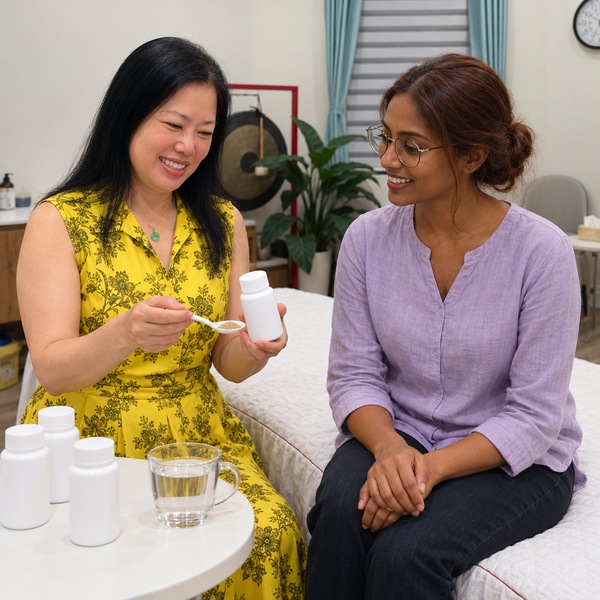
Jiangnan families have long prized winter herbal pastes written for one person. That individual focus still matters with granule bottles, even when containers and symptoms look alike.
Shanghai and the wider Jiangnan region are known for their herbal paste culture. Traditionally, a physician wrote an individual formula in late autumn or early winter, and the ingredients were slowly concentrated into a glossy preparation, sometimes with honey or nuts. Many families still look forward to the ritual each year.
Learning about the craft is engaging, but a production story does not show that any preparation suits every reader. Notably, the classical Shanghai approach itself centred on a personal formula rather than a one-size product, and that principle matters just as much today.
Dr Christine Shen, Acupuncturist, uses Chinese herbal granules in bottle containers; the clinic does not make or supply pastes. Similar symptoms or similar-looking bottles do not mean two people need the same preparation, so each product carries its own written directions for preparing, measuring and storing it.
Keep the conversation on your own situation rather than recreating a recipe from overseas. Helpful topics include:
Ask before substituting another bottle, combining products or following an unrelated traditional recipe.
Keep the label and instructions together, and tell Christine and your pharmacist about any change in your medicines or health. If you are unsure whether a symptom is linked to the granules, ask before changing the dose.
If you grew up with paste-making in your family, share those memories at the Lane Cove clinic. They often open an interesting conversation about how a centuries-old tradition has travelled from Jiangnan kitchens to a modern Sydney consultation room.
Copyright© 2002-2026 visuallink© SaaS - Web Hosted Solutions, Design and Maintenance by Visual Link IT Pty Ltd - Software Solutions

Please Login or Sign up to be able to comment